
For years, the internet has felt like a law of nature—always there, always responsive. Click, load, repeat. But over the past week, that illusion flickered.
One of the most unsettling moments came when infrastructure tied to Ubuntu—a cornerstone of the open-source world—became temporarily unreachable. For developers and system administrators, it wasn’t just an inconvenience. It was a rupture in something that’s supposed to always be there.
And it didn’t happen in isolation.
A series of disruptions rippled outward—from infrastructure services to online games—briefly punching holes in the sense of permanence we’ve come to expect from the web.
Individually, these incidents aren’t unprecedented. Together, they raise a harder question:
Are we witnessing isolated failures—or a system under coordinated pressure?
When the Backbone Wobbles
Some of the most attention-grabbing reports pointed to strain on core internet services—systems that quietly keep everything else running.
Content delivery and protection layers, including providers like Cloudflare, reportedly faced unusually large traffic floods. In parallel, parts of the open-source ecosystem—highlighted by the Ubuntu disruption—experienced outages that stalled updates, deployments, and access to critical resources.
If the higher-end estimates circulating online are accurate, the scale of some traffic surges would push into record-setting territory. At that level, a DDoS attack stops being a nuisance and starts becoming a stress test of global infrastructure design.
Still, scale alone doesn’t prove coordination. It only proves capability.
The Noise in the System
At the same time, more visible platforms began to flicker.
Servers for titles like Grand Theft Auto Online and Dead by Daylight experienced disruptions that, under normal circumstances, might barely raise an eyebrow.
Games go down. Servers overload. Maintenance happens.
But when entertainment platforms start failing alongside development infrastructure, perception shifts. It no longer feels like routine instability. It feels systemic.
That perception—fair or not—is powerful.
The Botnet Question
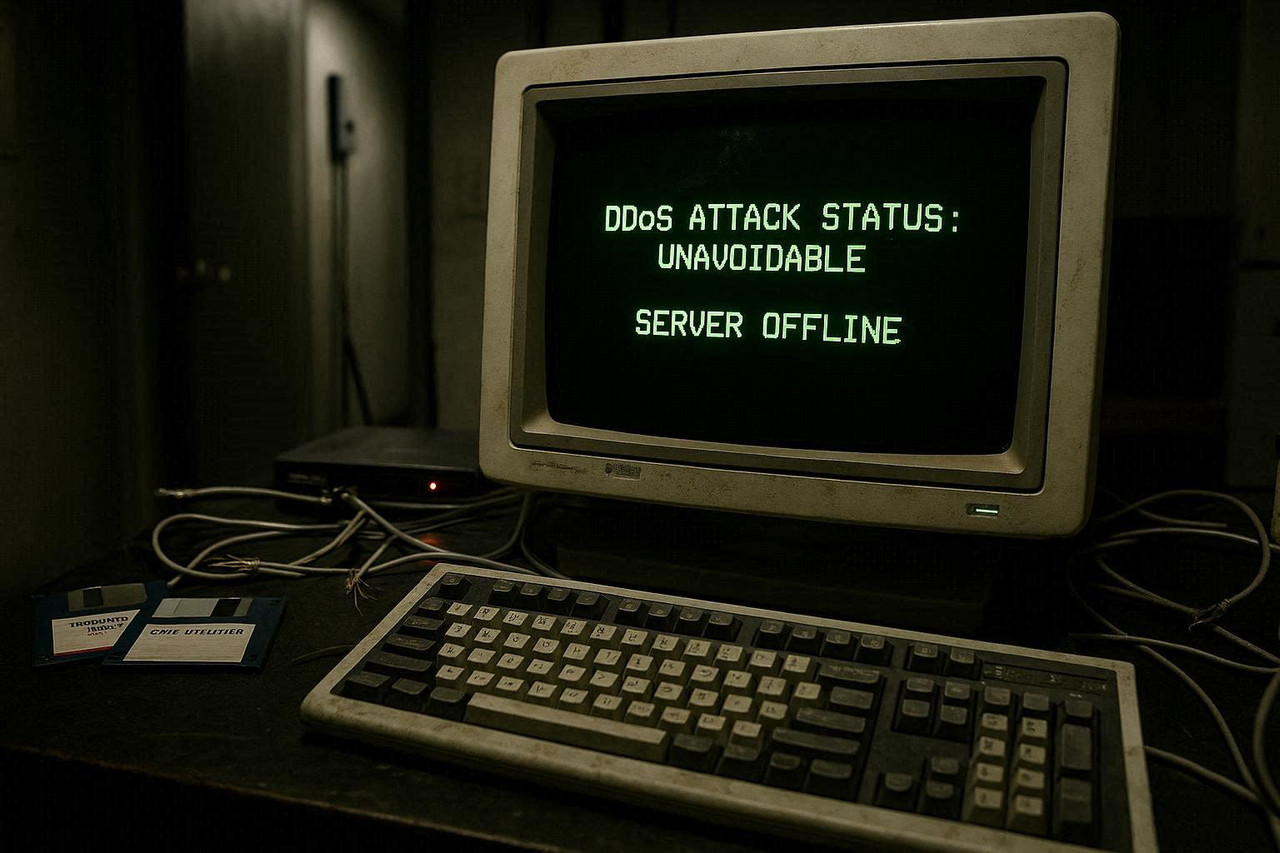
Some reports and online discussions have pointed to large-scale botnets as a possible driver behind the traffic floods.
Modern botnets are no longer just clusters of infected PCs. They can include:
-
Cloud infrastructure
-
IoT devices
-
Everyday consumer hardware
At scale, they can generate extraordinary volumes of traffic with minimal coordination.
There are also growing claims that automation and AI-assisted tooling are accelerating how these attacks are built and deployed. That doesn’t mean machines are “running the war,” but it does suggest that speed and scale are outpacing traditional defenses.
Still, attribution remains one of cybersecurity’s hardest problems. Naming specific groups or campaigns without strong, public evidence risks turning analysis into speculation.
Correlation vs. Coordination
This is the line that matters most.
It’s tempting to connect everything—the Ubuntu outage, CDN strain, gaming disruptions—into a single, coordinated campaign. A clean narrative is always appealing.
But the internet is a deeply interconnected system where:
-
Failures cascade
-
Traffic rerouting creates unintended pressure
-
Independent incidents overlap in time
What looks like coordination can sometimes be coincidence amplified by complexity.
That doesn’t make the situation harmless. It makes it harder to interpret.
Are We Entering a New Phase?
So, is this a cyber war?
Not in any formally declared sense. But something is shifting.
-
The scale of disruption appears to be growing
-
The range of targets is widening
-
The visibility of outages is increasing
It may be more accurate to think of this moment not as open conflict, but as persistent pressure—a landscape where infrastructure is constantly tested, probed, and occasionally broken.
The Real Takeaway
The biggest lesson from this past week isn’t that the internet is collapsing.
It’s that the internet is more fragile—and more contested—than it appears on an ordinary day.
When something as foundational as Ubuntu briefly disappears, it exposes a truth we often ignore: even the most trusted layers of the digital world depend on systems that can fail.
For developers, that might mean:
-
Mirroring dependencies
-
Designing for failure as a baseline
For users, it’s simpler:
-
The services we rely on aren’t guaranteed
-
Stability is something that has to be continuously maintained
The Question Going Forward
Maybe this wasn’t the start of a global cyber war.
Maybe it was something quieter—and more revealing:
A glimpse of what the internet looks like when it’s pushed closer to its limits.
Not broken. Not gone. But no longer invisible.
And once you’ve seen that…
you don’t quite trust the silence the same way again.



Leave a Comment